Logan Land & Ranch Services
Orange tractor pulling a rotary cutter through tall weeds in a pasture, with wooded hills behind.

Brush Hogging · Tulsa & Northeast Oklahoma — Get overgrown acreage back under control.

Heavy-duty mowing with a 12-foot batwing brush hog — often the most economical first step when a property is overgrown but does not require heavy land-clearing equipment.

  • 12-foot batwing

    Heavy-duty mowing

  • Grass to saplings

    Weeds & light brush

  • Economical start

    No heavy clearing

  • Owner-operated

    One point of contact

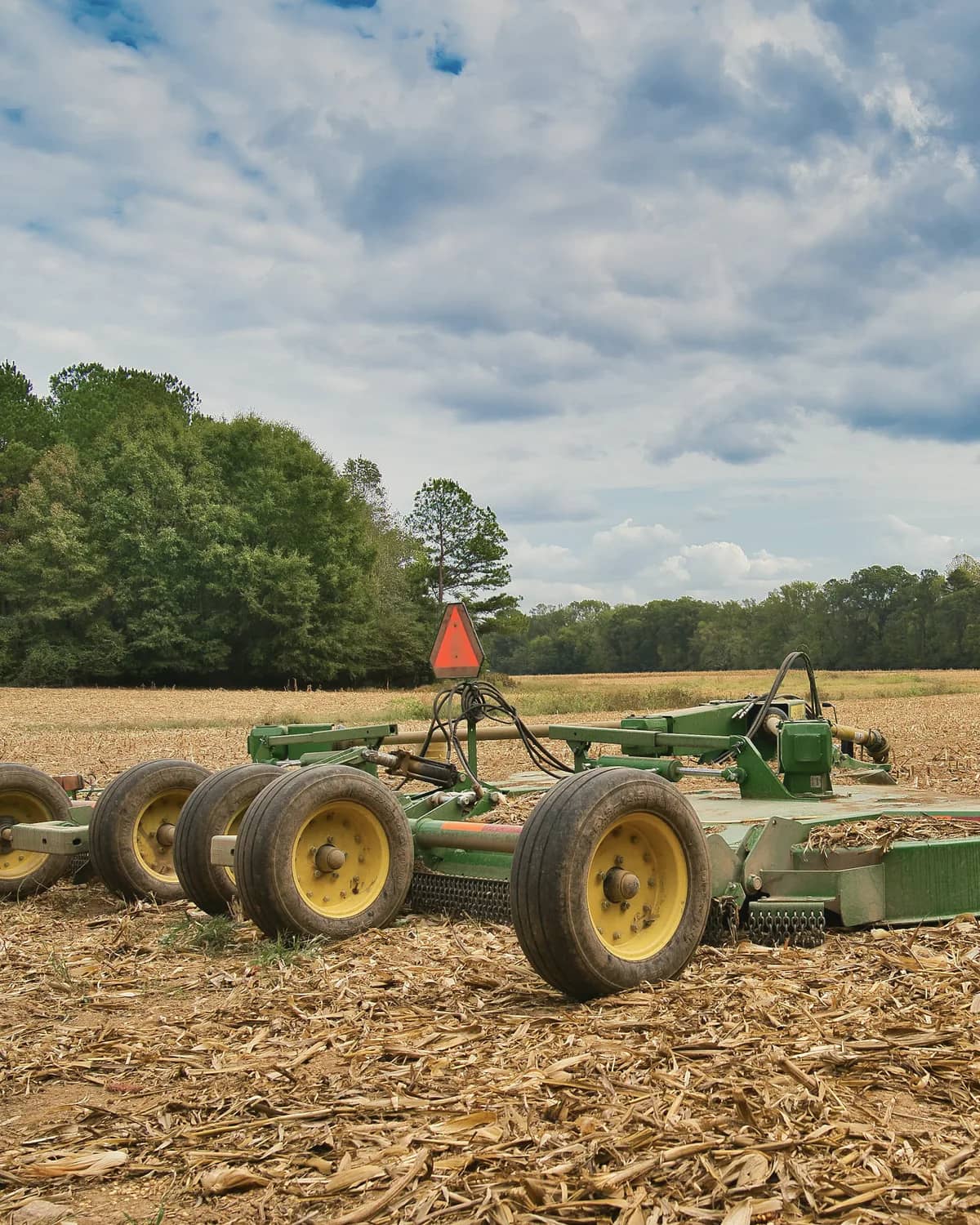
Large batwing rotary cutter resting in a cut corn field, with a tree line behind.

12-foot batwing · Brush hog

Brush hogging

Heavy-duty mowing for overgrown land

Brush hogging is heavy-duty mowing for overgrown rural property — done with a tractor and a 12-foot batwing brush hog, not a lawn-care setup.

Heavy-duty mowing for

  • Tall grass and weeds
  • Briars, light brush and small saplings
  • Overgrown fields and pastures
  • Vacant or neglected acreage
  • Rural lots awaiting construction or sale

When the land needs more than brush hogging — cedars, small trees, vines and brambles — forestry mulching takes over, and many larger projects combine the two.

Brush hog or mulch? See what fits your land

Where brush hogging fits

Routine cut or full reclaim

Whether the property needs a routine pasture cut or hasn’t been touched in a decade, we’ll help you determine the most sensible way to tackle it.

  1. Reclaim. Get it back under control

    Overgrown fields and pastures, vacant or neglected acreage and rural lots awaiting construction or sale — cut back to ground that’s cleaner, more accessible and more manageable.

  2. Maintain. Keep it there

    Routine pasture cuts, plus mowing and vegetation management around fence lines, ponds, barns, field edges, drive approaches, private roads and rural structures.

    Fence lines, ponds & property edges

  3. Improve. Put it back to work

    Clear ATV trails, shooting lanes and feeder clearings before deer season, or cut and maintain firebreaks — brush hogging as low as possible to reduce the fuel load.

    Deer season & hunting land prepFirebreaks & fuel reduction

The right tool for the job

Brush hogging or forestry mulching?

Not every overgrown property needs forestry mulching — and usually not all of the land does. We don’t oversell equipment. We brush hog where it makes sense and mulch where it’s needed.

Brush hoggingThis page

Grass to small saplings

Heavy-duty mowing with a 12-foot batwing brush hog — often the most economical way to reclaim acreage when heavier clearing isn’t necessary.

Forestry mulching

Cedars and small trees

A skid-steer mulching head shreds cedars, small trees about 2–11 inches in diameter, vines and brambles into coarse mulch — and can work around the trees you want to keep.

Many properties need both.

On larger projects, a custom plan combining brush hogging with selective forestry mulching can be the best overall use of equipment for your goals.

Not sure? Text a few photos to 918-268-3138 and we’ll recommend a plan.

Pricing

What does brush hogging cost?

There’s no honest single price that fits every property. For larger or reasonably uniform acreage, we can often give a straightforward project price after reviewing the property.

What shapes your estimate

Pricing depends on more than the acres to be cut.

  • Acres to be cut
  • Height & density of the growth
  • Briars, light brush & small saplings
  • Terrain
  • Rocks, wire, stumps & debris
  • Gate & equipment access
  • Distance from our base

Same acreage, different job

  • 5 acresA routine pasture cutLighter job
  • 5 acresUntouched for a decadeMuch heavier job
A decade of briars, saplings and hidden debris is a very different job. We price the property accordingly.

Small projects carry a minimum service charge, since loading, transporting and unloading the tractor and brush hog is part of every job.

Seasonal specials

Seasonal special

Deer Season Special

$1,000 for 6 hours of brush hogging & property prep

A quick one-day prep to get your hunting land ready for opening day.

Seasonal offer. What six hours covers depends on your property’s vegetation, terrain and access. Call or text to confirm availability.
Seasonal special

Fire Mitigation Special

$1,000 for 6 hours of brush hogging

Six hours of brush hogging focused on firebreaks and fuel reduction.

Seasonal offer. What six hours covers depends on your property’s vegetation, terrain and access. Call or text to confirm availability.

Questions

Brush hogging FAQs

How is brush hogging different from regular mowing?

Brush hogging is heavy-duty mowing for overgrown rural property — tall grass and weeds, briars, light brush and small saplings. We do it with a 12-foot batwing brush hog on a tractor: a properly equipped land-services setup, not residential lawn care.

What’s the difference between brush hogging and forestry mulching?

Brush hogging (also called bush hogging) is heavy-duty mowing for tall grass, weeds, briars, light brush and small saplings. Forestry mulching uses a skid-steer mulching head for heavier growth like cedars, small trees, vines and dense undergrowth. On larger projects, combining the two is often the most efficient plan.

What if part of my property is too heavy to brush hog?

Then we plan to forestry mulch just those areas and brush hog the rest. Not every overgrown property needs forestry mulching — and usually not all of the land does. On larger projects, a custom plan combining the two can be the best overall use of equipment for your goals.

Do you charge by the acre?

Not with a flat per-acre rate. Acreage matters, but so do vegetation height and density, brush and saplings, terrain, rocks, wire, stumps or debris, equipment access and travel distance. For larger or reasonably uniform acreage, we can often give a straightforward project price after reviewing the property.

Is there a minimum charge?

Yes. Small projects are subject to a minimum service charge, because loading, transporting, unloading and setting up equipment is part of every job. Call or text 918-268-3138 to talk through your project.

Can you estimate from photos?

Often, yes. Many properties can be evaluated remotely using your photos, acreage information and satellite imagery. More complicated projects may need an in-person visit before we can give an accurate estimate.

Brush hogging near Tulsa

Our primary service area follows the Tulsa-area east/west highway and turnpike corridors and surrounding rural communities, including:

  • Tulsa
  • Broken Arrow
  • Coweta
  • Catoosa
  • Inola
  • Wagoner
  • Claremore
  • Sapulpa
  • Sand Springs
  • Kellyville
  • Bristow
  • Glenpool
  • Jenks
  • Bixby

We also consider larger projects elsewhere in northeast Oklahoma.

Not sure if you’re in our service area? Call or text 918-268-3138.

See our full service area

Reclaim. Maintain. Improve.

Ready to put your land back to work?

The easiest way to start is a call or text with your property location, approximate acreage and a few photos. You’ll talk directly with the owner-operator and know the plan and price before any work begins.

Call or text918-268-3138

Hours: Mon–Sat 6 AM–7 PM · Sun closed

Not sure what you need? Ask for a recommendation and we’ll suggest a plan.

Photos that help us estimate

For the quickest, most accurate first look, text us:

  • A wide shot of the property
  • The typical vegetation
  • The worst of the growth
  • Your gate & equipment access

We may still need to see it in person, but photos give us a much better idea.